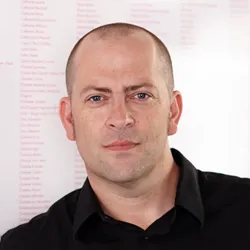
Chris Lord
London Institute of Cancer Research
Biography
Professor Chris Lord is Deputy Head of Division, Team Leader of the CRUK Gene Function Laboratory and Professor of Cancer Genomics in the Breast Cancer Now Toby Robins Research Centre at The Institute of Cancer Research, London. Much of his work focusses on exploiting genetic concepts such as synthetic lethality to identify new approaches to treating cancer and to understand the variable effectiveness of existing treatments.
Chris carried out his PhD in complex disease genetics with John Todd and Richard Gardner at the University of Oxford before carrying out a Post-Doctoral Fellowship with Todd at the University of Cambridge. Chris joined the ICR London as a Post-Doctoral Fellow with Alan Ashworth in 2000, where he was joint first author on a paper describing the synthetic lethal interaction between BRCA-tumour suppressor genes and PARP inhibitors (Nature 2005), observations that eventually led to the use of these drugs for the treatment of breast, ovarian, prostate and pancreatic cancers.
Later, Chris exploited high-throughput genetic perturbation screens to understand a variety of cancer-related phenotypes including drug sensitivity/resistance and the identification of novel therapeutic targets (e.g. Cancer Cell 2008, Cancer Discov. 2011), a number of which are now being investigated as part of new drug development programmes. Chris has also used multiple approaches to uncover and/or understand clinically-relevant mechanisms of resistance to DNA repair inhibitors (e.g. Nature 2008, Nature Commun. 2018, Cancer Discov. 2020, Nature Cell Biol 2022) and to identify novel synthetic lethal approaches that target hard-to-treat cancers, including those with ARID1A, Rb or E-cadherin defects (e.g. Cancer Discov. 2018).
More recently, Chris has focused on using high-throughput genetic perturbation screens to understand the principles that govern the robustness of synthetic lethal interactions (e.g. Elife 2020) and using an understanding of how PARPi resistance emerges to design new ways of treating BRCA1/2 mutant cancer, either by the use of Polymerase Theta inhibitors or by activating the immune system (Cancer Discov. 2020, Nat. Comms 2021). The impact of the work led by Lord is demonstrated by the number of completed and on-going clinical trials in cancer that are based upon synthetic lethal interactions he has identified as well as the assessment in these trials of biomarkers of cancer drug sensitivity/resistance he has identified.
Relevant Publications
- Longitudinal profiling identifies co-occurring BRCA1/2 reversions, TP53BP1, RIF1 and PAXIP1 mutations in PARP inhibitor resistant advanced breast cancerHarvey-Jones E., Raghunandan M., Robbez-Masson L., Magraner-Pardo L., Alaguthurai T., Yablonovitch A., Yen J., Xiao H., Brough R., Frankum J., Song F., Yeung J., Savy T., Gulati A., Alexander J., Kemp H., Starling C., Konde A., Marlow R., Cheang M., et al., Tutt A.N.J., Annals of Oncology (2024).
- Complex synthetic lethality in cancerRyan C.J., Devakumar L.P.S., Pettitt S.J., Lord C.J., Nature Genetics (2023).
- The ubiquitin-dependent ATPase p97 removes cytotoxic trapped PARP1 from chromatinKrastev D.B., Li S., Sun Y., Wicks A.J., Hoslett G., Weekes D., Badder L.M., Knight E.G., Marlow R., Pardo M.C., et al., Lord C.J., Nature Cell Biology (2022).
- Polθ inhibitors elicit BRCA-gene synthetic lethality and target PARP inhibitor resistanceZatreanu D., Robinson H.M.R., Alkhatib O., Boursier M., Finch H., Geo L., Grande D., Grinkevich V., Heald R.A., Langdon S., et al., Lord C.J., Nature Communications (2021).
- Clinical BRCA1/2 reversion analysis identifies hotspot mutations and predicted neoantigens associated with therapy resistancePettitt S.P., Frankum J.R., Punta M., Lise S., Alexander J., Chen Y., et al., Lord C.J., Cancer Discovery (2020).
- Integrative analysis of large-scale loss-of-function screens identifies robust cancer-associated genetic interactionsLord C.J., Quinn N., Ryan C.J., eLife (2020).
- E-Cadherin/ROS1 Inhibitor Synthetic Lethality in Breast CancerBajrami I., Marlow R., van de Ven M., Brough R., Pemberton H.N., Frankum J., Song F., et al., Lord C.J., Cancer Discovery (2018).
- Genome-wide and high-density CRISPR-Cas9 screens identify point mutations in PARP1 causing PARP inhibitor resistancePettitt S.J., Krastev D.B., Brandsma I., Dréan A., Song F., Aleksandrov R., et al., Lord C.J., Nature Communications (2018).
- PARP inhibitors: Synthetic lethality in the clinicLord C.J., Ashworth A., Science (2017).
- Targeting the DNA repair defect in BRCA mutant cells as a therapeutic strategyFarmer H., McCabe N., Lord C.J., Tutt A.N., Johnson D.A., Richardson T.B., et al., Ashworth A., Nature (2005).