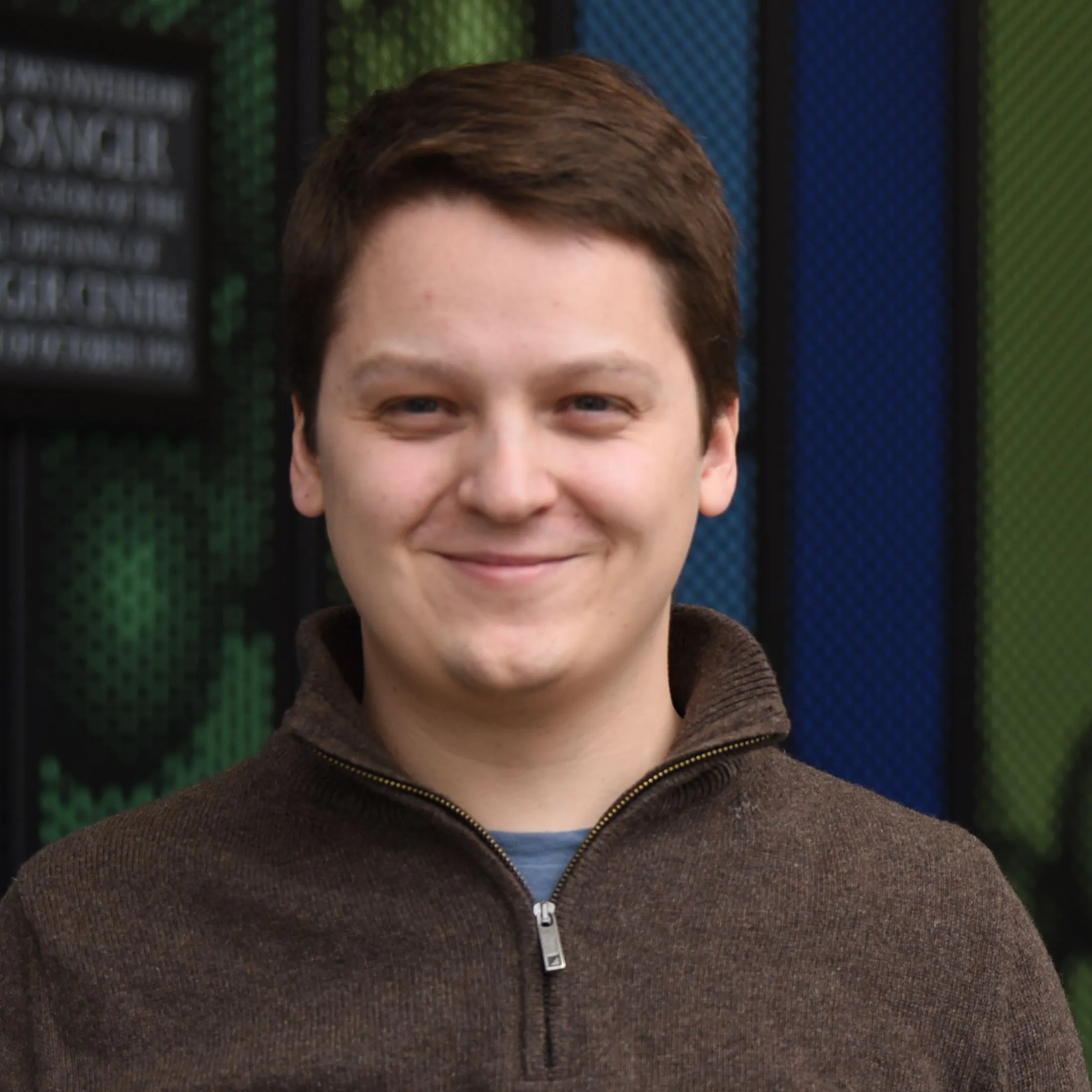
Emanuel Gonçalves
INESC-ID, IST - Universidade de Lisboa
Biography
Emanuel Gonçalves is an Assistant Professor at the Instituto Superior Técnico - Universidade de Lisboa and an Integrated Researcher at INESC-ID. His work lies at the interface of computer science, biology, and medicine, and is dedicated to training multidisciplinary engineers capable of bridging these vital fields.
Our research group is developing machine learning models that integrate large-scale multi-modal cancer datasets (multi-omics, CRISPR functional screens, electronic health records) to predict tumour biomarkers. This work focuses on identifying and prioritizing therapeutic targets to combat drug resistance and accelerate the translation of discoveries into clinical applications.
Emanuel Gonçalves earned a PhD from the University of Cambridge (2017), with research carried out at the European Bioinformatics Institute (EMBL-EBI). Earlier training includes an Informatics Engineering degree and a Master’s in Bioinformatics from the University of Minho.
Relevant Publications
- Synthetic augmentation of cancer cell line multi-omic datasets using unsupervised deep learningCai Z., Apolinário S., Baião A.R., Pacini C., Sousa M.D., Vinga S., Reddel R.R., Robinson P.J., Garnett M.J., Zhong Q., Gonçalves E., Nature Communications (2024).
- Synthetic lethality in cancer drug discovery: challenges and opportunitiesGonçalves E., Ryan C.J., Adams D.J., Nature Reviews Drug Discovery (2025).
- A technical review of multi-omics data integration methods: from classical statistical to deep generative approachesBaião A.R., Cai Z., Poulos R.C., Robinson P.J., Reddel R.R., Zhong Q., Vinga S., Gonçalves E., Briefings in Bioinformatics (2025).
- A comprehensive clinically informed map of dependencies in cancer cells and framework for target prioritizationPacini C., Duncan E., Gonçalves E., Gilbert J., Bhosle S., Horswell S., Karakoc E., Lightfoot H., Curry E., Muyas F., Bouaboula M., Pedamallu C.S., Cortes-Ciriano I., Behan F.M., Zalmas L.-P., Barthorpe A., Francies H., Rowley S., Pollard J., Beltrao P., Parts L., Iorio F., Garnett M.J., Cancer Cell (2024).
- Minimal genome-wide human CRISPR-Cas9 libraryGonçalves E., Thomas M., Behan F.M., Picco G., Pacini C., Allen F., Vinceti A., Sharma M., Jackson D.A., Price S., Beaver C.M., Dovey O., Parry-Smith D., Iorio F., Parts L., Yusa K., Garnett M.J., Genome Biology (2021).
- Pan-cancer proteomic map of 949 human cell linesGonçalves E., Poulos R.C., Cai Z., Barthorpe S., Manda S.S., Lucas N., Beck A., Bucio-Noble D., Dausmann M., Hall C., Hecker M., Koh J., Lightfoot H., Mahboob S., Mali I., Morris J., Richardson L., Seneviratne A.J., Shepherd R., Sykes E., Thomas F., Valentini S., Williams S.G., Wu Y., Xavier D., MacKenzie K.L., Hains P.G., Tully B., Robinson P.J., Zhong Q., Garnett M.J., Reddel R.R., Cancer Cell (2022).
- Prioritization of cancer therapeutic targets using CRISPR-Cas9 screensBehan F.M., Iorio F., Picco G., Gonçalves E., Beaver C.M., Migliardi G., Santos R., Rao Y., Sassi F., Pinnelli M., Ansari R., Harper S., Jackson D.A., McRae R., Pooley R., Wilkinson P., van der Meer D., Dow D., Buser-Doepner C., Bertotti A., Trusolino L., Stronach E.A., Saez-Rodriguez J., Yusa K., Garnett M.J., Nature (2019).
- Base editing screens map mutations affecting interferon-γ signaling in cancerCoelho M.A., Cooper S., Strauss M.E., Karakoc E., Bhosle S., Gonçalves E., Picco G., Burgold T., Cattaneo C.M., Veninga V., Consonni S., Dinçer C., Vieira S.F., Gibson F., Barthorpe S., Hardy C., Rein J., Thomas M., Marioni J., Voest E.E., Bassett A., Garnett M.J., Cancer Cell (2023).
- Drug mechanism-of-action discovery through the integration of pharmacological and CRISPR screensGonçalves E., Segura-Cabrera A., Pacini C., Picco G., Behan F.M., Jaaks P., Coker E.A., van der Meer D., Barthorpe A., Lightfoot H., Mironenko T., Beck A., Richardson L., Yang W., Lleshi E., Hall J., Tolley C., Hall C., Mali I., Thomas F., Morris J., Leach A.R., Lynch J.T., Sidders B., Crafter C., Iorio F., Fawell S., Garnett M.J., Molecular Systems Biology (2020).
- Fumarate is an epigenetic modifier that elicits epithelial-to-mesenchymal transitionSciacovelli M., Gonçalves E., Johnson T.I., Zecchini V.R., da Costa A.S.H., Gaude E., Drubbel A.V., Theobald S.J., Abbo S.R., Tran M.G.B., Rajeeve V., Cardaci S., Foster S., Yun H., Cutillas P., Warren A., Gnanapragasam V., Gottlieb E., Franze K., Huntly B., Maher E.R., Maxwell P.H., Saez-Rodriguez J., Frezza C., Nature (2016).